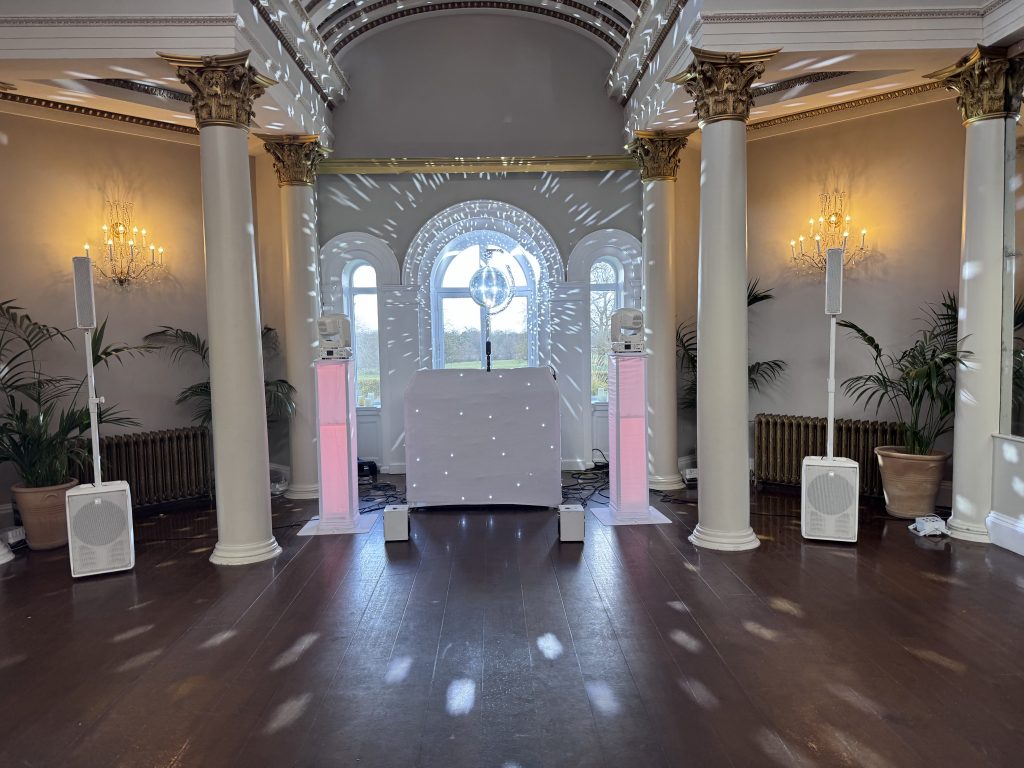
There’s a moment that happens at almost every wedding I work at. The venue looks beautiful during the day — natural light, fresh flowers, everything exactly as the couple imagined it. Then evening arrives, the overhead lights come on, and suddenly the room feels completely different. Not bad necessarily. But flat. Functional. Like a conference room that happens to have a dancefloor in it.
Lighting is the invisible element of wedding design. When it’s done well nobody notices it — they just feel it. The room feels warm, romantic, alive. When it’s done badly, or not thought about at all, even the most stunning venues can feel underwhelming after dark.
After 30 years of weddings across the North East I’ve seen both. Here’s what I’ve learned about what lighting actually does to a room — and how to get it right.
The difference between venue lighting and atmosphere lighting
Most venues have fixed lighting — ceiling fixtures, wall lights, maybe some uplighters built into the architecture. This is functional lighting. It lets people see their food and find the toilets. It is not atmosphere lighting.
Atmosphere lighting is what transforms a room from a well-lit space into somewhere that feels genuinely special. It’s the difference between walking into a room and thinking “this is nice” and walking in and feeling something.
The good news is you don’t need a huge budget to make a significant difference. Even a relatively small amount of well-placed lighting will do more for your venue’s evening atmosphere than almost any other element of your decor.
What different lighting types actually do
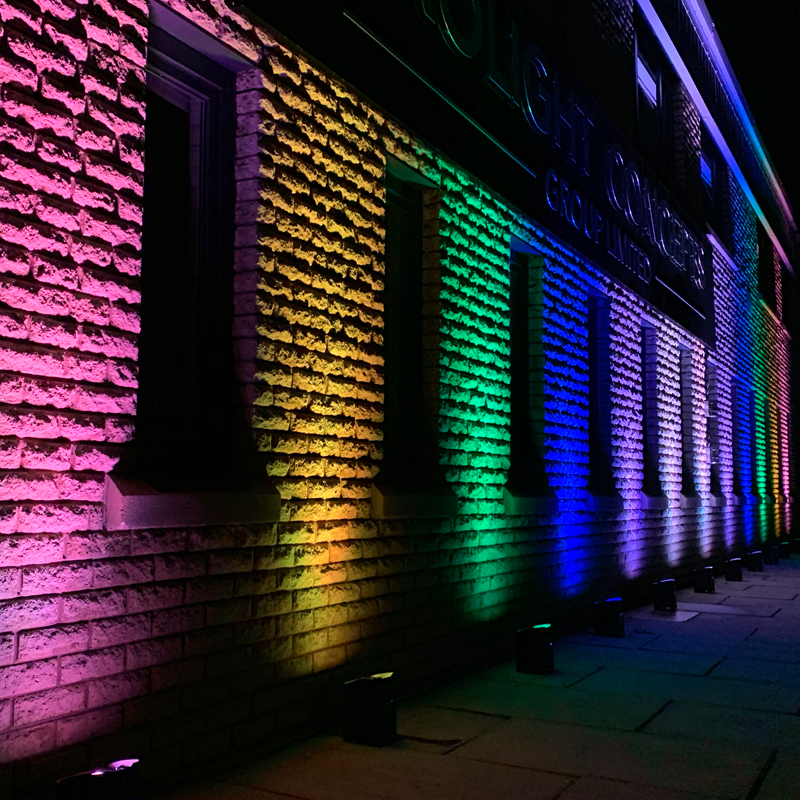
Uplighting Uplighters placed around the perimeter of the room wash the walls in colour and completely change the feel of the space. A stone-walled venue like Lumley Castle or Lartington Hall with warm amber uplighting feels completely different to the same room lit in cool white. Uplighting also makes rooms feel larger and draws attention upward to architectural features — vaulted ceilings, exposed beams, ornate cornicing — that overhead lighting flattens out.
For most venues I’d recommend warm tones — amber, soft pink, gold — rather than saturated colours. They photograph better and feel more elegant. Saturated reds and blues can look dramatic in photos but often make the room feel like a nightclub rather than a wedding.
Dynamic dancefloor lighting Once the evening reception gets going and the dancefloor fills, the lighting needs to shift with it. Moving heads, beam effects, and colour washes create energy and tell guests that the party has properly started. This is where the mood pivots — the subtle romantic atmosphere of the first dance gives way to something more celebratory and high energy.
Getting this transition right is something I think about carefully at every wedding. The worst thing is going from first dance straight into club-level strobing with no build. The best evenings have a gradual shift — the room warms up, the lighting intensifies with the music, and by the time the dancefloor is packed it feels completely natural.
Pin spotting A focused beam of light directed onto your cake table, your top table, or your floral centrepieces makes them look intentional and considered rather than just placed. It’s a small detail that makes a noticeable difference in photos especially — a well-lit cake photograph beautifully, the same cake in flat overhead light looks ordinary.
Fairy lights and draping Ceiling draping with fairy lights is one of the most popular choices for North East venues — and for good reason. It works in almost every space, creates an instantly romantic atmosphere, and photographs brilliantly. The key is density — sparse fairy lights look cheap, a properly dense canopy looks genuinely magical.
Gobo projection / monogram lighting A custom gobo projects your initials, a pattern, or a design onto the wall or dancefloor. It’s a personal touch that’s surprisingly affordable and adds something uniquely yours to the room. Particularly effective in venues with large blank walls — Wynyard Hall’s ballroom, for example, or any of the larger barn conversions across the region.

How lighting and music work together
This is something couples rarely think about but that I’m always conscious of as the evening progresses. Lighting and music need to work in sync — they’re both creating the same atmosphere and if they’re pulling in different directions the room feels disjointed.
During dinner, soft background music and warm static lighting — guests relaxed, conversations flowing. During the first dance, a spotlight on the couple and the dancefloor, everything else dimmed. As the evening builds, the lighting shifts with the energy of the music — gradually more dynamic, more movement, more colour.
When it’s coordinated properly the transition between each phase of the evening feels seamless. Guests don’t notice the lighting changing — they just feel the energy shift and respond to it.
Practical things worth knowing
Talk to your venue coordinator early. Some venues have restrictions on what lighting can be used — particularly around rigging points, open flames, and certain types of effects. Finding out late in the planning process that your venue won’t allow a particular setup is frustrating and avoidable.
Think about your colour palette. Your lighting should complement your wedding colours rather than clash with them. If your flowers are blush pink and your bridesmaids are in sage green, cool blue uplighting will fight both. Warm tones work with almost every palette.
Consider the whole evening, not just one moment. The most common mistake is thinking about lighting only for the first dance. Your guests will be in the room for five or six hours. How the room feels during the meal, during speeches, during the dancefloor — all of it matters.
Photography. Talk to your photographer about lighting before the day. A good photographer will adapt to whatever conditions they’re working in, but knowing in advance that you’re having uplighting or effects means they can plan for it rather than be surprised by it.
What I include and what’s available as an add-on
Dynamic dancefloor lighting is included as standard across all my packages — moving heads, colour washes, and beam effects that build with the music throughout the evening.
Uplighting, pin spotting, fairy light canopies, and gobo projection are available as add-ons depending on your venue and budget. If you’re not sure what your venue needs or what would work best in the space, I’m happy to talk it through — I’ve played at most of the major North East venues and know how they light.
Thinking about your venue?
If you’re planning a wedding across Newcastle, Durham, Sunderland, Middlesbrough, Teesside, York or anywhere in the wider North East and want to talk through lighting options for your specific venue, get in touch.
📞 07717 380610 ✉ yourevent@alastairreay.co.uk Or view packages and prices